I ran across this article, Mental health in Nigeria: A Neglected issue in Public Health, that discusses mental health care in Nigeria. The study connects to a forthcoming story we will share about a mother who has experienced the high cost of mental health care in Nigeria. The study states “n Nigeria, the disparity between available healthcare services and need for mental health services is palpable. Although, the country has made significant advances on challenging public health problems, health-related policy development and legislation in trying to achieve health for all policy, there have been challenges with regards to mental health services including that of policy development and legislation, financing, research, training and integration of mental health care into primary health care.”
Virtual Checkups for Patients in Remote Islands in Bangladesh [Barrier: Location/Access]
An article on NPR called The Doctor Will Skype You Now: Virtual Checkups Reach Bangladesh’s Isolated Islands, discusses the barrier to public health of location/access in Bangladesh’s remote islands. The article discusses the health care situation on Chars — “low-lying, temporary sand islands that are continuously formed and destroyed through silt deposition and erosion. They’re home to over six million people, “. The article states:
“Yet for many char inhabitants — some of Bangladesh’s poorest — paying for health care is a costly ordeal. Victims of erosion lose their houses, agricultural land and jobs as farmers, fishers and day laborers. Though government hospitals are free, many people hesitate to go, citing long commutes, endless lines and questionable diagnoses. For convenience sake, one-third of rural households visit unqualified village doctors, called “kabirajs,” who rely on unscientific methods of treatment, according to a 2016 study in the peer-reviewed journal Global Health Action.”
The physician, Dr. Tina Mustahid, livestreams from Dhaka for free remote medical consultations.
“Even off the chars, Bangladesh faces a critical deficit of health services. The country has half the doctors-per-person ratio recommended by the World Health Organization: Roughly one doctor per 2,000 people, instead of one doctor per 1,000 people. And of those physicians, many are concentrated in cities: 70% of the country’s population live in rural areas, yet less than 20% of health workers practice there.”
Michelle Obama expresses gratitude for health insurance [Barrier: Cost of Care/Financial Barrier]
In an article entitled How Michelle and Barack Obama dealt with daughter’s very difficult health diagnosis, Michelle Obama discusses when her daughter was 3 months old and was diagnosed with spinal meningitis. She says “She turned out – obviously, as this story ends, she is fine, she’s healthy, she’s a beautiful young lady, but if we hadn’t had insurance, and access to a pediatrician, and access to a hospital where we didn’t have to worry about the cost of care – if we had waited overnight, if we had postponed acting, there’s no telling what the outcome would’ve been.” This statement illuminates her awareness of the challenges people face in the United States who do not have health insurance.
Nurse Shortage & Burnout [Barrier: Medical Staff Shortage & Burnout]
Today, an article in The Washington Post, entitled Why are nurses quitting? Ask the nurse no hospital will hire., brings attention to the shortage of nurses in the United States. It discusses the fact that while “Nursing is the nation’s largest healthcare profession, with nearly 4.2 million registered nurses (RNs) nationwide. ” they are devalued and burnt out.
A Similar Organization!
Vivek discovered another organization that is working on similar issues! It is called Our Health Stories and here are two screenshots of their website’s organization. Check out their website for more information.


Racial Disparities in Maternal and Infant Health
A recent article in the New York Times, Childbirth Is Deadlier for Black Families Even When They’re Rich, Expansive Study Finds, is just one more example of the Barriers people face to public health. In this case, the article points to a study about how race impacts childbirth. “Research has repeatedly shown that Black mothers and babies have the worst childbirth outcomes in the United States.”
Another study, Physician–patient racial concordance and disparities in birthing mortality for newborns, mentioned in the article states “Findings suggest that when Black newborns are cared for by Black physicians, the mortality penalty they suffer, as compared with White infants, is halved.”

Inequity in Congenital Heart Disease Diagnosis
Here is another recent article that highlights the inequities in public health. The article is on USA Today and is entitled “Heart defect diagnosis often comes too late – or not at all – for Latino infants, study finds”. It makes reference to this study The Impact of Neighborhood Socioeconomic Status, Race and Ethnicity, and Language on Prenatal Diagnosis of CHD.
The study finds that “Infants born to Latino, low-income or limited-English-speaking parents are more likely to be diagnosed later with congenital heart disease than white infants – or lack a prenatal diagnosis at all, a new study found.”
The article discusses that the findings are:
- “Babies born to Latina mothers were 3.2 times less likely to be diagnosed before birth compared with their white counterparts.
- Babies born to mothers with a preferred language other than English were five times more likely to lack a prenatal diagnosis than those born to English speakers.
- Non-English-speaking mothers who did receive a prenatal diagnosis were diagnosed, on average,five weeks later than English-speaking patients.
- Those from neighborhoods with lower socioeconomic status were diagnosed up to 3.4 weeks later.”
According to the CDC website, “Congenital heart defects (CHDs) are the most common type of birth defect. ” and “About 1 in 4 babies born with a heart defect has a critical CHD (also known as critical congenital heart defect).1 Babies with a critical CHD need surgery or other procedures in the first year of life.”
Gianelle, M., Turan, S., Mech, J. et al. The Impact of Neighborhood Socioeconomic Status, Race and Ethnicity, and Language on Prenatal Diagnosis of CHD. Pediatr Cardiol (2023). https://doi.org/10.1007/s00246-023-03095-z
Health inequities continue to affect Black Californians the most
An article in the LA Times today discusses a new study by the California Health Care Foundation that finds that “More than half of Black Californians said there was a time in the last few years when they thought they would have received better healthcare if they had belonged to a different racial or ethnic group”. The study finds that “But even when controlling for geographic region, income, gender, language and age, Black Californians were twice as likely as white Californians to report any negative experiences with healthcare providers in recent years.” The article also discusses the amount of medical debt Californians have.

Social Determinants of Health: Transportation and the Role of Hospitals
Another relevant study, from American Hospital Association, Social Determinants of Health Series: Transportation and the Role of Hospitals, connects to the conversations of our animations subjects. Here is what the article states: “Each year, 3.6 million people in the United States do not obtain medical care due to transportation issues. Transportation issues include lack of vehicle access, inadequate infrastructure, long distances and lengthy times to reach needed services, transportation costs and adverse policies that affect travel. Transportation challenges affect rural and urban communities.”
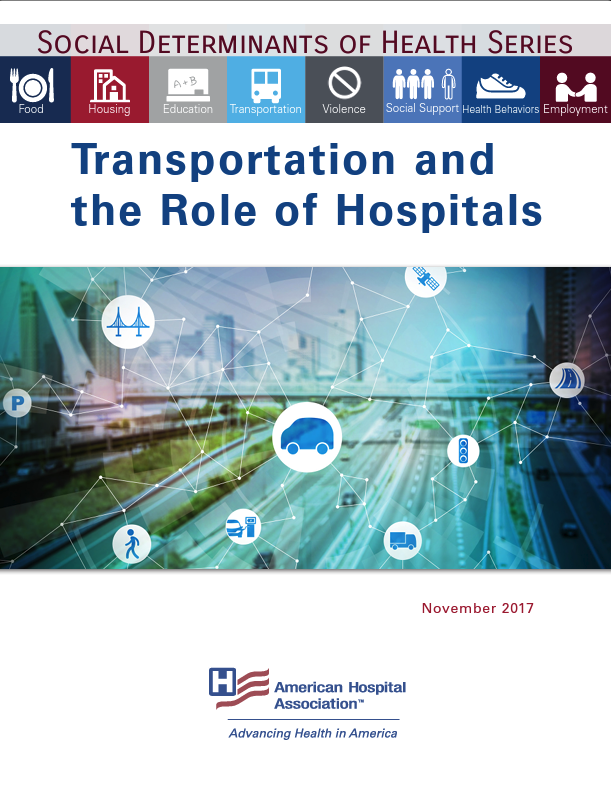
Social Determinants of Health
Here is an article about the things that impact the health of people, called Social Determinants of Health.

Social determinants of health (SDOH) have a major impact on people’s health, well-being, and quality of life. Examples of SDOH include:
- Safe housing, transportation, and neighborhoods
- Racism, discrimination, and violence
- Education, job opportunities, and income
- Access to nutritious foods and physical activity opportunities
- Polluted air and water
- Language and literacy skills
 HEALTH CONVERSATIONS: When Aware We Care